Gestalt Practice: An Introduction to Awareness and Wholeness
An overview of Gestalt Practice and its core principles

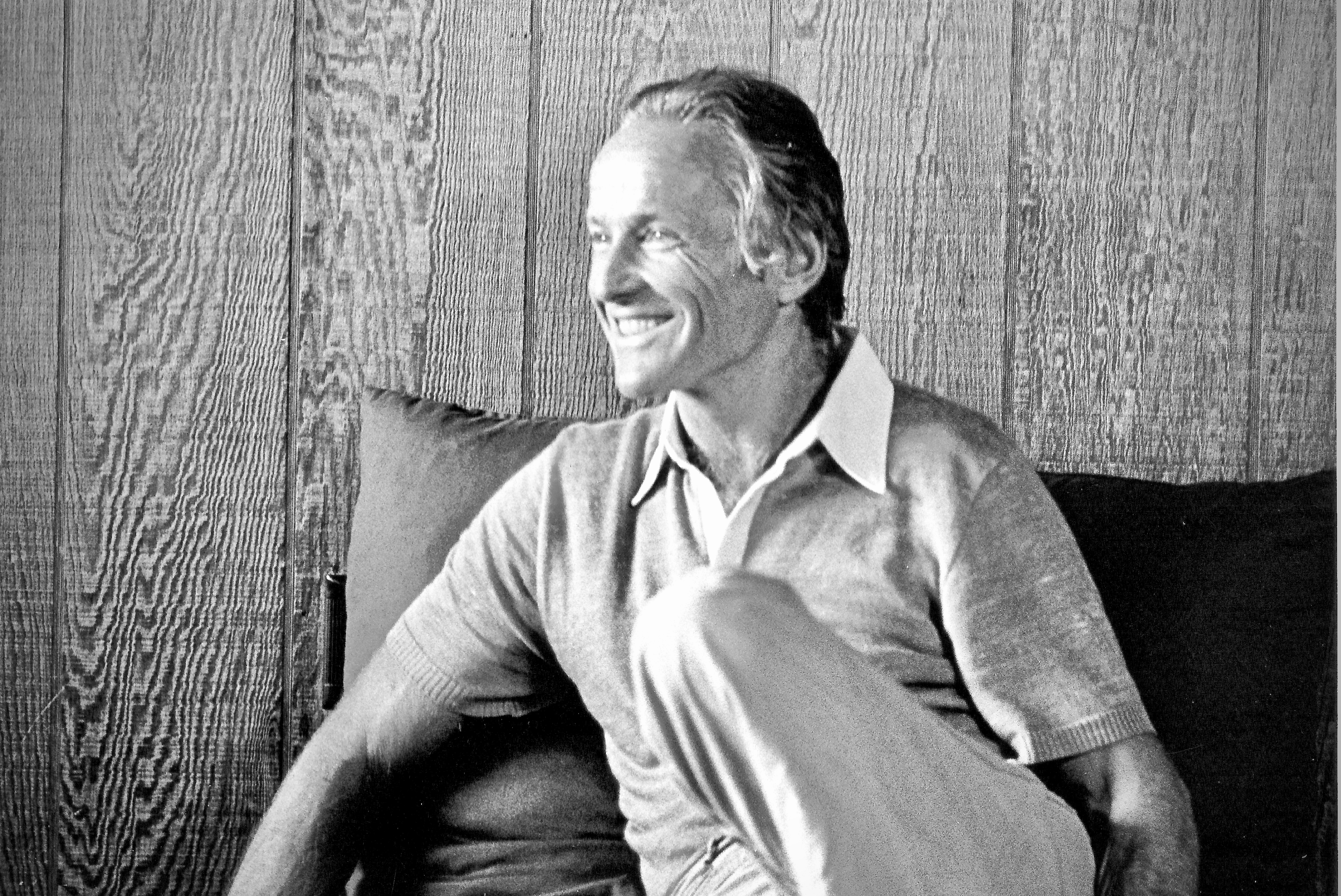
What happens when we truly meet another person—or even ourselves—without trying to change what we find? In the words of Fritz Perls, often considered the father of Gestalt Therapy, “Contact is the appreciation of differences.” Dick Price, co-founder of Esalen Institute, later added, “And, the recognition of similarities.”
In that simple exchange, something essential is revealed: true contact is not about fixing or agreeing, but about meeting experience as it is. This is at the heart of Gestalt Practice. For me, this is not just a concept—it is something I return to again and again, in my own life and in working with others, as a living doorway into presence.
In a world increasingly focused on quick fixes and external solutions, Gestalt Practice offers something radically different: a return to present-moment awareness and trust in our innate capacity for organismic self-regulation.
This is not therapy, nor a system designed to cure or fix. Rather, it is an awareness practice that honors “what is,” supports natural unfolding, and recognizes the intelligence inherent in each person’s unique process. Traditional therapeutic approaches often operate from a deficit model, assuming something is broken and needs repair. Gestalt Practice begins from a different premise: each person inherently contains their own wisdom and capacity for healing. In my own experience, both personally and in working with others, I’ve seen how powerful it can be when nothing is being “worked on,” and instead something is simply allowed to unfold.
The Origins of an Evolutionary Approach
Gestalt Practice emerged from Dick Price’s own lived experience. After studying psychology at Stanford University and Harvard University, Price underwent a profound personal crisis that led to time in psychiatric hospitals in the 1950s. He came to question a central assumption of psychiatric care—that the healing process itself was pathological. Where others saw symptoms to suppress, Price recognized a natural movement toward wholeness that required support rather than intervention.
This experience, combined with his time with Fritz Perls and the rich intellectual atmosphere of Esalen Institute, gave birth to something distinctly new. Price took Perls’ Gestalt Therapy and expanded it beyond the confines of the medical model, incorporating influences from Buddhist meditation, Taoist philosophy, and the somatic work of Wilhelm Reich and Moshe Feldenkrais. The result was Gestalt Practice—a form that transcends the patient–therapist paradigm, creating a more egalitarian and experiential approach to human awareness.
What emerged was not another therapeutic modality. Instead of a model of pathology, this represents a move to a practice model that rests in our capacity for awareness, a way of being present with oneself, others, and the ineffable that honors the complexity and wisdom of human experience. As Price often said, his approach was guided by three simple principles: “Trust Process, Support Process, and Get Out of the Way.” At times, he would add, “If in doubt, do less.”
The Heart of the Practice
Gestalt Practice, at its core, is an awareness practice in which we cultivate embodied, present-moment awareness of the unfolding experience of the here and now—a path toward authentic growth, wholeness, and aliveness.
It is fundamentally nonanalytic, noncoercive, and nonjudgmental. In other words, this is a form that supports curiosity, permission, choice, equanimity, and acceptance—representing a meaningful shift in how we approach human experience.
Rather than focusing on fixing or achievement, this approach encourages us to:
• Awareness — cultivating embodied presence with what is arising
• Choice — growing responsiveness and resilience
• Trust — in the organism’s inherent capacity for self- and co-regulation
In Gestalt Practice, we engage emotional and somatic intelligence together, gently turning toward what arises moment to moment. We learn to allow more space for silence, sensation, emotional expression, and communication. Over time, we become more aware of habitual, reactive patterns—especially those that may no longer be skillful.
This approach continues to evolve, integrating wisdom traditions and contemporary approaches that cultivate awareness. We learn practices that support a more deeply embodied daily life.
Instead of analyzing what’s wrong or pushing toward predetermined outcomes, the practice creates space for what is already present to unfold. I often notice that when people begin to sense this shift—from trying to change experience to actually contacting it—there is both relief and a quiet kind of surprise.
The Wisdom of What Is
Perhaps the most challenging aspect of Gestalt Practice for newcomers is its orientation toward what is rather than what should be. We live in a culture oriented toward improvement and optimization. Gestalt Practice suggests a different approach: acceptance of present experience as the doorway to transformation.
This does not mean passive resignation or avoiding necessary action. Rather, it recognizes that lasting change emerges from direct contact with present reality, not from resisting it. When we meet our sadness, anger, fear, or even joy with full presence, something begins to shift. We discover that emotions carry their own intelligence and, when met with awareness, tend to move through us and reorganize in more integrated and life-supporting ways.
The practice reflects a well-known Gestalt paradox: when we allow experience fully, change begins to occur. The more we try to force outcomes, the more we create tension. When we approach experience with curiosity and acceptance, natural movement becomes possible.
The Dance of Reflector and Initiator
One of the most distinctive aspects of Gestalt Practice is how it reimagines relationship. Instead of therapist and client, we have Initiator and Reflector—two people engaged in a collaborative exploration of awareness with clear roles.
The Initiator actively explores their experience, while the Reflector offers presence and simple reflections, supporting awareness without directing it.
This creates a different dynamic. Authority for experience and choice remains with the Initiator. The Reflector does not diagnose, prescribe, or push toward particular outcomes. Instead they offer clarity, experiments, and support for whatever emerges.
How We Practice
While Gestalt Practice often takes place in structured sessions, its deeper intention is to become a way of living.
In workshops and one-to-one sessions, we explore the principles of Gestalt Practice through direct experience—applying them to everyday life and discovering what it means to show up more fully.
Gestalt Practice is experiential, and simple experiments may be offered. Movement, voice, exaggeration, space, breath, and shifts in attention invite awareness into direct experience rather than analysis. These are invitations, not prescriptions. Exploration unfolds through individual, paired, and group practice, supporting awareness and deepening relationship to self, others, and the more-than-human world.
The Open Seat practice offers participants the opportunity to engage in one-to-one sessions within a group setting—witnessing and being witnessed in the unfolding of authentic experience.
Most sessions begin with Basic Practice and the Continuum of Awareness—an invitation to settle into immediate, embodied experience. Awareness rests first in the sensations of breathing, then opens to outer sensation, inner sensation, feelings, emotions, and thoughts as they unfold moment to moment. This grounds awareness in the present and develops continuity of attention across inner, outer, and cognitive realms. From this foundation, the work unfolds organically, guided by whatever arises for the Initiator.
The awareness skills developed in practice—attention, acceptance, and trust in natural process—become resources for navigating relationships and daily life. The practice teaches us to recognize the difference between reacting and responding. Reacting is automatic, often where past conditioning and future fears show up in the present. Responding emerges from awareness and choice. This shift can transform both our inner experience and our relationships. I’ve come to trust that this shift, while often subtle at first, can be profoundly life-changing.
Gestalt Practice cultivates what Buddhists call “the wisdom of equality”—the ability to meet both pleasant and unpleasant experience with the same quality of awareness.
Through Gestalt Practice, we bear witness to aspects of life that are both ordinary and ineffable. Participants are invited to show up, pay attention to what has heart and meaning, and remain open to what life presents—letting life live through us.
The Integration of East and West
One of the unique aspects of Gestalt Practice is how it weaves together wisdom from Eastern contemplative traditions with Western psychological insight. From Buddhism comes an emphasis on mindfulness, present-moment awareness, and compassion. From Taoism comes the principle of wu wei—non-interference with natural process. From Western psychology comes an understanding of human development, an inclusion of the wisdom of the body, the importance of contact and relationship, and practical tools for exploring emotional and psychological experience.
Seen through a wider lens, this integration reflects something more fundamental: we are not separate from the systems we inhabit, but participants in a living field of relationships. In this way, Gestalt Practice begins to reveal an ecology of being—where inner experience, relational contact, and the larger environment are continuously influencing and shaping one another.
This integration creates a practice that is both spiritually grounded and psychologically sophisticated—both individually focused and relationally aware. It honors the more mysterious dimensions of human experience while remaining practical and accessible.
A Living Legacy
Dick Price died in a hiking accident in 1985, yet the practice he developed continues to evolve and influence people around the world. His wife and collaborator, Christine Stewart Price, carried the work forward, developing her own form called Gestalt Awareness Practice. The influence of Gestalt Practice can be seen in many contemporary approaches to personal growth, mindfulness, and somatic awareness.
What makes this legacy particularly powerful is how it reflects Price’s insight into the nature of authentic teaching and learning. Like Fritz Perls before him, Price encouraged people to take what was useful and make it their own, rather than creating carbon copies.
The practice continues to evolve because it is grounded in principles rather than rigid techniques—trust in natural process rather than adherence to prescribed methods. Each person who engages with Gestalt Practice brings their own experience and perspective, contributing to its ongoing development.
An Invitation to Natural Wholeness
In a world that can feel fragmented and overwhelming, Gestalt Practice offers a return to something essential: trust in our own experience and our capacity for growth.
It invites us to slow down, pay attention, and discover what emerges when we stop trying to fix ourselves and begin to be with ourselves as we are.
This is not always easy. It requires courage, patience, and humility—and at times, a sense of humor. Yet for those willing to engage, it offers something deeply human: a way home to our own nature. And in that return, I find again and again that nothing essential is missing—only waiting to be met, just as it is.
The practice reminds us that we are not problems to be solved, but living systems capable of awareness, relationship, and wholeness. And perhaps, in the end, it is simply this: showing up for life and meeting what is.
Author’s Note
This perspective reflects how I currently understand, offer, and live Gestalt Practice. It has been shaped through my time with Dick Price, Chris Price, and others—both as a student and as a co-leader. It is not a definitive statement of the work, but a lived lens formed through practice, relationship, and direct experience.
I invite you to take what resonates, explore it in your own way, and allow your understanding to unfold. In that spirit, the practice remains alive—something each of us discovers for ourselves.
As I often refer to Gestalt Practice in my writing, this piece offers a place to begin for those who are curious to learn more. For more about Gestalt Practice through the lens of Ecology: An Ecology of Being
In a culture so oriented toward fixing, trusting “what is” is a radical and welcome shift. Thank you, Steven, for capturing this so beautifully.
A very nice summary.